
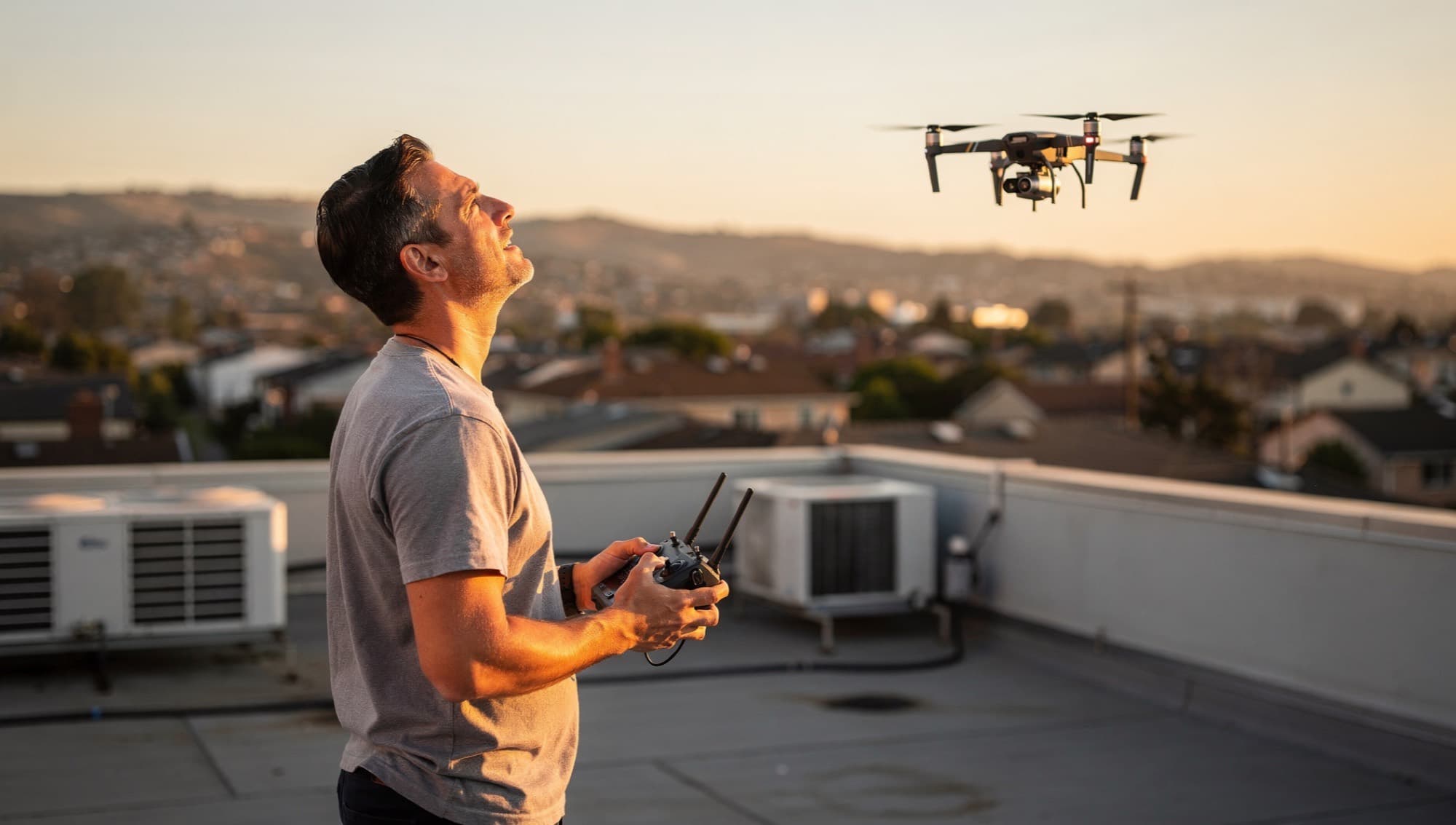
Drone Insurance for California Businesses
If you fly a drone commercially — real estate, surveying, inspection, agriculture, or video — the aircraft is rarely the expensive part of a claim. Drone insurance covers the liability if a flight injures someone or damages property, and can cover the aircraft and the camera alongside it.
What it covers
- Liability for bodily injury or property damage arising from flight operations
- Hull coverage for physical damage to the aircraft itself
- Payload coverage for cameras, gimbals, sensors, and other mounted equipment
- Non-owned and hired drone liability, when you rent an aircraft or bring in a pilot
- Personal and advertising injury, which is where invasion-of-privacy allegations are usually addressed
Who needs it
Commercial operators flying under FAA Part 107 — real estate and property photographers, surveyors, roof and facade inspectors, solar and utility inspection, agricultural scouting, and film and event production.
Federal rules do not require you to carry insurance to fly commercially, but clients, venues, and property owners routinely do. A certificate naming them as additional insured is often the condition of getting on site at all.
Common gaps we see
Most general liability policies contain an aircraft exclusion, and it is usually written broadly enough to include unmanned aircraft — so the policy a business already carries may not respond to a drone claim at all. Hull and payload are separate from liability and are not automatic; on a well-equipped rig the sensor package can be worth more than the airframe carrying it.
How SureNest helps
As an independent broker, we compare multiple carriers to match your situation with the right policy — not a one-size-fits-all plan pushed by a single insurer.